Certificate of Analysis
Independent laboratory testing confirms purity and composition of this research compound.
ENDO PASSED
Stack Rationale
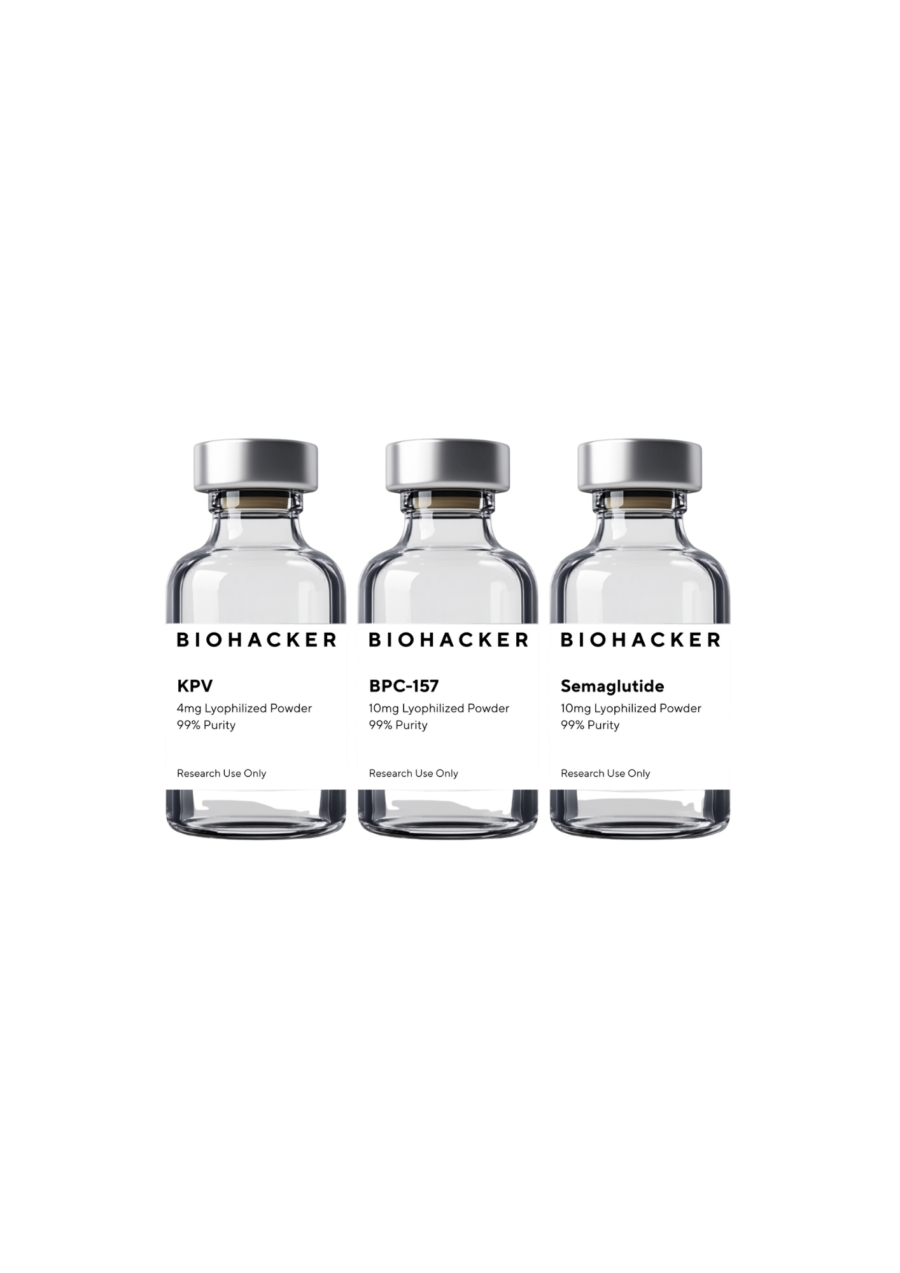
The Semaglutide Protocol pairs the world’s most clinically validated GLP-1 receptor agonist with two complementary research peptides: BPC-157 for GI mucosal protection and gut motility modulation, and KPV for localised gut anti-inflammatory signalling via melanocortin receptor MC1R. This combination addresses a key research question surrounding GLP-1 agonist biology: the gastrointestinal tolerability and mucosal health context in which sustained GLP-1R activation occurs. It provides investigators with tools to study both GLP-1R metabolic effects and the gut microenvironment simultaneously.
What’s Included
| Compound | Vial dose | Qty | Mechanism |
| Semaglutide | 5 mg | 2 vials | GLP-1R agonist — appetite, insulin secretion, gastric emptying |
| BPC-157 | 5 mg | 2 vials | GI cytoprotection, gut motility modulation, mucosal repair |
| KPV (Lys-Pro-Val) | 2 mg | 2 vials | MC1R agonist — gut anti-inflammatory signalling |
| Form | Lyophilized powder (all vials) |
| Purity | ≥99% (HPLC verified, per vial) |
| Mass confirmation | ESI-MS confirmed (per vial) |
| Heavy metals | <10 ppm (ICP-MS) |
| Endotoxin | <1.0 EU/mg (LAL) |
| Residual moisture | <5.0% (Karl Fischer) |
| Storage — lyophilized | −20°C, protected from light |
| Lyophilized stability | 24 months from manufacture |
| Reconstitution | Bacteriostatic water for injection (per compound) |
| Storage — reconstituted | 4°C, use within 28 days |
| Packaging | Sterile glass vials · rubber stoppers · aluminium crimp caps |
Research Context
| Compound | GI-relevant mechanism | Key research endpoint |
| Semaglutide | Slows gastric emptying, reduces GI motility via GLP-1R on enteric neurons; central appetite suppression via area postrema | Gastric emptying rate, intestinal transit, food intake in rodent models |
| BPC-157 | Protects GI mucosa from stress-induced damage; modulates enteric NO/COX signalling; promotes mucosal angiogenesis | GI mucosal integrity, ulcer healing rate, motility indices, cytoprotection markers |
| KPV | C-terminal tripeptide of α-MSH; agonises MC1R on intestinal epithelium and macrophages; reduces NF-κB-mediated inflammatory signalling | IBD model inflammation indices, cytokine profiles (IL-6, TNF-α), epithelial barrier integrity |
Research Notes
GLP-1 receptor activation has complex effects on GI physiology: appetite suppression, delayed gastric emptying, and altered intestinal motility are central to its mechanism. BPC-157 is one of the most thoroughly studied peptides for GI mucosal biology, with documented protective effects across gastric ulcer, colitis, and small intestinal injury models. Its COX/NO modulatory mechanism operates independently of the GLP-1R pathway, making it a mechanistically orthogonal addition. KPV’s role as a gut-selective anti-inflammatory tool (MC1R expression is particularly high in intestinal epithelium and lamina propria macrophages) provides a third axis — relevant for researchers studying the interaction between GLP-1R agonism and gut inflammatory tone in metabolic disease models.
Frequently Asked Questions
- Why is BPC-157 included with semaglutide in a research protocol?
- BPC-157 is studied as a GI-protective agent in its own right. In the context of GLP-1R agonist biology research, it provides a mechanistic tool for examining GI mucosal health alongside the primary metabolic endpoints. Researchers studying semaglutide’s GI effects (delayed gastric emptying, reduced motility, mucosal exposure to altered luminal contents) use BPC-157 as a cytoprotective reference compound in comparative models.
- What is KPV and why is it at a lower vial dose?
- KPV (Lys-Pro-Val) is the C-terminal tripeptide of α-MSH, a small molecule with potent anti-inflammatory activity at nanomolar to picomolar concentrations in intestinal cell and macrophage models. Its effective in vitro concentrations are orders of magnitude lower than most other peptides in this range, so the 2 mg vial provides a proportionally larger number of experimental doses relative to larger peptides at similar vial sizes.
- Can all three compounds be used in an in vitro gut model simultaneously?
- Yes. Intestinal organoids, Caco-2 monolayer models, and ex vivo intestinal segment preparations are used to study the combined effects of GLP-1R agonism and gut barrier biology. Each compound should be titrated independently before combined protocols to establish effective concentrations in the specific model system used.
What compounds are in the The Semaglutide Protocol?
The The Semaglutide Protocol includes: Semaglutide (5 mg × 2), BPC-157 (5 mg × 2), and KPV (4 mg × 1). This stack pairs a GLP-1 receptor agonist (Semaglutide) with a gut mucosal protection agent (BPC-157) and an MC1R-mediated gut anti-inflammatory peptide (KPV). It addresses the gastrointestinal biology context of GLP-1R activation alongside metabolic effects.
Are the The Semaglutide Protocol vials pre-mixed or individual?
Yes — each compound ships as a separate, individually labelled lyophilized vial. They are not pre-mixed. Each vial is labelled with compound name, dose, batch number, and storage instructions to ensure clear identification throughout the research workflow.
What purity are the compounds in the The Semaglutide Protocol?
All compounds are ≥99% by HPLC, with ESI-MS mass confirmation and endotoxin testing to USP <85> standards. Full Certificate of Analysis documentation is available on the COA page and traceable by batch number for each compound.
Is this for human consumption?
No. The The Semaglutide Protocol from BIOHACKER is sold strictly for in vitro research and laboratory use. It is not intended for human or veterinary use and is not a dietary supplement or pharmaceutical product.
Ready to order? Add to Cart — $395
Research Use Only. This product is intended for in-vitro laboratory research purposes only. Not for human consumption, clinical use, veterinary use, or food/drug manufacturing. Not evaluated or approved by the FDA or any regulatory authority. Handle with appropriate laboratory precautions. Keep out of reach of children.
Reviews
There are no reviews yet.