Certificate of Analysis
Independent laboratory testing confirms purity and composition of this research compound.
ENDO PASSED
What Is NAD+?
Nicotinamide adenine dinucleotide (NAD+) is a pyridine nucleotide coenzyme found in every living cell, functioning as the central hydride-transfer currency of cellular metabolism and as the obligate substrate for three major signalling enzyme families: sirtuins (SIRT1–7), poly-ADP-ribose polymerases (PARPs), and cyclic ADP-ribose synthases including CD38. In preclinical models, tissue NAD+ concentrations decline approximately 50% between young adulthood and senescence across liver, muscle, and hypothalamic compartments, a trajectory driven primarily by age-associated loss of NAMPT — the rate-limiting enzyme of the salvage pathway that accounts for more than 90% of intracellular NAD+ recycling in mammals. Orally administered NAD+ undergoes rapid gut-lumen hydrolysis to NMN and then nicotinamide, with downstream tissue NAD+ elevation confirmed at three to six hours post-dosing in rodent pharmacokinetic models, mediated by efficient salvage pathway reconversion rather than intact molecular absorption.
What The Research Shows
Preclinical data consistently demonstrates that oral NAD+ precursor delivery elevates tissue NAD+ pools across liver, kidney, and skeletal muscle compartments. In rat pharmacokinetic studies, despite less than 5% of oral NAD+ reaching systemic circulation intact, liver and kidney NAD+ levels were significantly elevated above control values at three to six hours post-dosing — confirming that gut-lumen metabolites (NMN, nicotinamide) are efficiently salvaged back to NAD+ in peripheral tissues. In aged mouse models, NMN supplementation at 300–500 mg/kg/day restored hepatic and skeletal muscle NAD+ to approximately 40–60% above aged-control baselines, activating SIRT1 deacetylase activity 2.5-fold and upregulating PGC-1α protein expression 2.1-fold. Human skeletal muscle biopsy data in older adults corroborates the rodent findings: oral NAD+ precursor supplementation elevated muscle NAD+ metabolome by 40–60% from baseline across two independent randomised controlled trials, with parallel attenuation of cGAS-STING inflammatory pathway activation in muscle tissue.
| Research Area | Model | Key Finding |
|---|---|---|
| Oral bioavailability & salvage reconversion | Rat, gavage pharmacokinetics | Intact oral NAD+ constitutes <5% of detectable plasma species at 60 min post-dose; liver and kidney NAD+ levels significantly elevated at 3–6 hours via salvage pathway reconversion of absorbed NMN and nicotinamide |
| Age-associated NAD+ decline | Mouse, human tissue review | NAD+ levels decline ~50% between young adulthood and age 60 across multiple tissues; NAMPT activity identified as the primary rate-limiting bottleneck, declining 30–50% in aged adipose, liver, and hypothalamic tissue |
| SIRT1/SIRT3 activation & mitochondrial biogenesis | Aged mouse (22 months) | NMN supplementation increased skeletal muscle SIRT1 deacetylase activity ~2.5-fold and elevated liver and muscle NAD+ by 40–60% above aged-control values; hepatic fat content reduced by ~18% vs. age-matched vehicle controls |
| Muscle NAD+ elevation & physical performance | Aged mouse (24 months) | NMN at 500 mg/kg/day for 8 weeks produced a 14% increase in grip strength and 22% improvement in running endurance; muscle NAD+ elevated ~55% above control, with PGC-1α upregulated 2.1-fold and SIRT1 1.8-fold |
| Skeletal muscle NAD+ metabolome (human) | Human RCT, aged adults | Oral NAD+ precursor at 1,000 mg/day for 21 days elevated skeletal muscle NAD+ metabolome ~60% from baseline in aged adults, with upregulation of mitochondrial biogenesis gene networks; 2–8-fold inter-individual variability in response observed |
| cGAS-STING pathway attenuation (human) | Human RCT, men aged 65–80 | 24-week oral NAD+ precursor supplementation elevated skeletal muscle NAD+ ~40% from baseline and reduced cGAS-STING activation markers by 10–15% vs. placebo in aged male subjects |
| CD38 NADase axis | Mouse, aged knockout model | CD38 activity increases ~2–3-fold in aged mouse tissues; CD38 knockout animals maintained ~50% higher tissue NAD+ levels at 20 months vs. wild-type controls, establishing CD38 as a principal age-dependent NAD+ sink |
Key Mechanisms
- NAMPT-driven salvage pathway: NAMPT catalyses the conversion of nicotinamide → NMN → NAD+ and accounts for more than 90% of intracellular NAD+ recycling in mammals; its activity declines 30–50% with ageing, making it the primary rate-limiting bottleneck for endogenous NAD+ biosynthesis.
- Slc12a8 intestinal transporter: A specific NMN transporter in the jejunal wall enables direct gut-wall uptake of NMN without prior dephosphorylation to nicotinamide riboside; inhibition of this transporter reduces blood NMN bioavailability by approximately 80% in mouse models, identifying it as the dominant route of NMN intestinal absorption.
- First-pass gut-lumen hydrolysis: Orally administered intact NAD+ is rapidly cleaved in the gut lumen by CD73 and ectonucleotidases to NMN and then nicotinamide; less than 5% of oral NAD+ reaches systemic circulation intact, with efficacy mediated via downstream salvage reconversion in peripheral tissues.
- SIRT1/SIRT3 deacylase activation: Restored intracellular NAD+ pools activate sirtuin deacylases, driving PGC-1α-dependent mitochondrial biogenesis, DNA repair fidelity, and metabolic gene transcription — pathways that become progressively NAD+-starved in aged tissues.
- PARP1 substrate supply: PARP1 (poly-ADP-ribose polymerase) is the primary competing consumer of NAD+ during DNA strand-break repair; adequate NAD+ supply provides substrate for both PARP1 and sirtuins simultaneously, avoiding the competitive depletion that occurs when NAD+ pools are low.
- CD38 NADase competition: Age-associated increases in CD38 expression on immune cells (~2–3-fold in aged mouse tissues) represent a major NAD+-consuming pathway that competes directly with salvage recycling; elevated precursor supply can partially offset CD38-mediated NAD+ depletion.
- cGAS-STING pathway suppression: Adequate NAD+ availability attenuates mitochondrial DNA stress-induced cGAS-STING inflammatory signalling in skeletal muscle — a pathway activated by mtDNA leakage and implicated in the sterile chronic inflammation associated with ageing muscle.
- Circadian NAMPT regulation: NAMPT transcription is driven by BMAL1/CLOCK circadian machinery; both circadian disruption and ageing reduce NAMPT expression, creating a feedforward decline in NAD+ that precursor supplementation can partially compensate by bypassing the NAMPT bottleneck.
Why Oral Capsules?
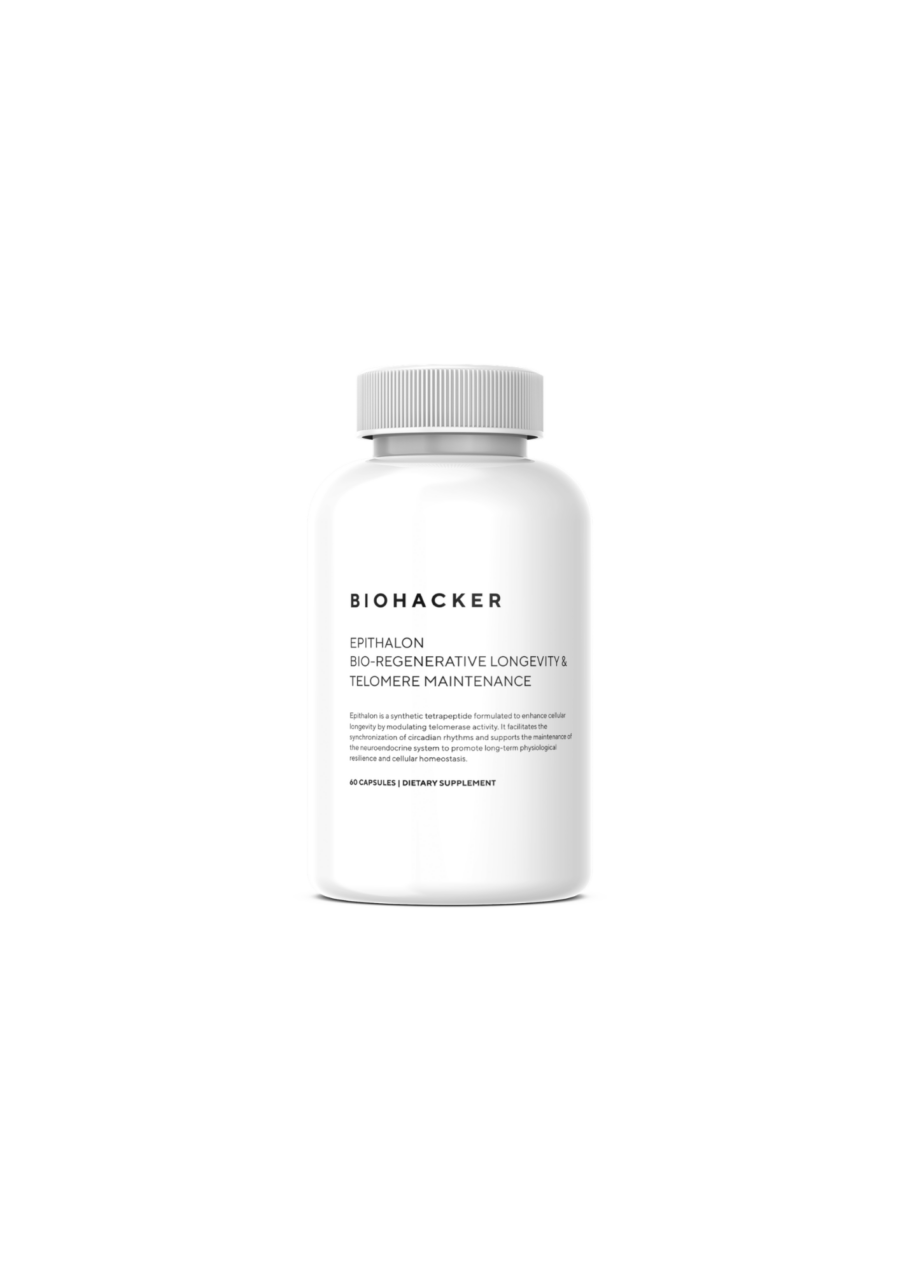
BIOHACKER formulates NAD+ in enteric-coated oral capsules — designed to survive gastric acid and deliver the active compound to the small intestine intact, where gut-lumen hydrolysis and Slc12a8-mediated uptake can proceed under optimal conditions. Preclinical data confirms systemic bioactivity and tissue NAD+ elevation from oral administration via salvage pathway reconversion. No needles. No reconstitution. No cold chain.
Specifications
| Attribute | Detail |
|---|---|
| Compound | Nicotinamide Adenine Dinucleotide (NAD+) |
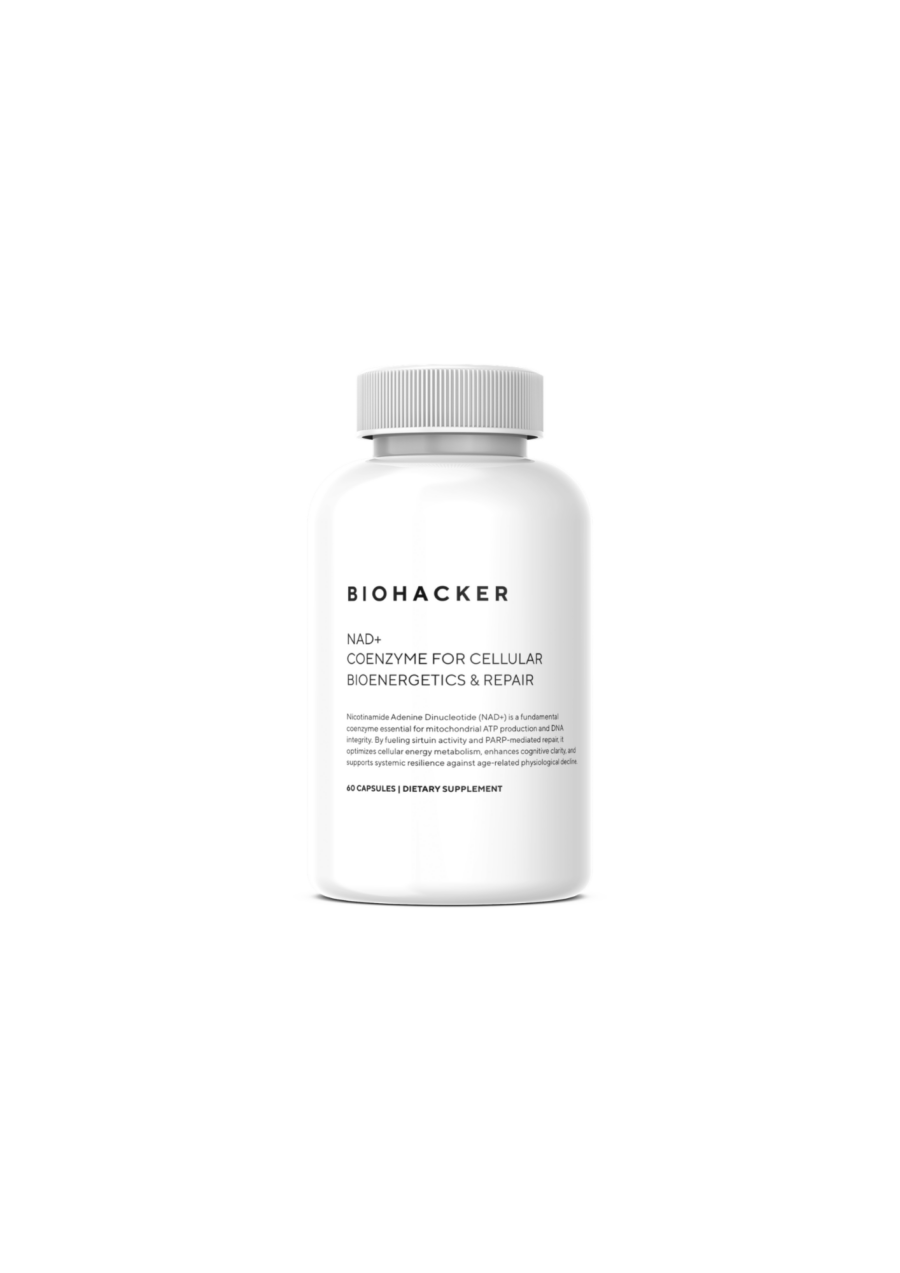
| Dose per capsule | 500 mg |
| Capsules per bottle | 60 |
| Purity | ≥99.1% (HPLC verified) |
| Form | Oral enteric-coated capsule |
| Storage | Cool, dry place. Refrigeration not required. |
| Endotoxin | Passed (<1 EU/mg) |
Frequently Asked Questions
What is NAD+ used for in research?
NAD+ is investigated in preclinical models for its role in sirtuin activation, mitochondrial biogenesis, DNA repair substrate provision, and the attenuation of age-associated metabolic decline. Animal model research has focused extensively on its capacity to restore tissue NAD+ pools that decline with ageing, and on the downstream effects of that restoration on SIRT1/SIRT3 signalling, PGC-1α-driven mitochondrial network expansion, and skeletal muscle bioenergetics.
Is NAD+ available as oral capsules?
Yes. BIOHACKER’s NAD+ is formulated in enteric-coated oral capsules at 500 mg per capsule, 60 capsules per bottle. Enteric coating is specifically relevant for NAD+ because it preserves compound integrity through the low-pH gastric environment, ensuring delivery to the small intestine where hydrolysis and Slc12a8-mediated NMN uptake occur under physiologically appropriate conditions.
What purity is BIOHACKER’s NAD+?
99.1% HPLC-verified, with a full Certificate of Analysis available on the product page. Every batch is independently tested for identity, purity, and endotoxin levels before release.
Is this for human consumption?
No. NAD+ from BIOHACKER is sold strictly for in vitro research and laboratory use. It is not intended for human or veterinary use and is not a dietary supplement or pharmaceutical product.
Ready to order? Add to Cart — $95
For research use only. Not for human consumption. Not intended to diagnose, treat, cure, or prevent any disease. This product is sold exclusively for in vitro research and laboratory purposes.
E. Kim –
NAD+ at 99.8{bc6192475b1f7ab2a319df0d74882f1947535342342376b459ce77de5d749ac5} is exactly what cellular energy metabolism research requires. Biohacker’s capsule format and documentation standard make it the cleanest oral NAD+ source I’ve used. Ordered alongside MOTS-c for a combined mitochondrial protocol.
I. Bjornstad –
Strong purity, clean documentation, fast dispatch. The COA is published and verifiable — not just a number on a label. For sirtuin pathway research, the quality of the NAD+ substrate matters and this hits the required threshold.