The hallmarks of aging framework (López-Otín et al., Cell, 2013; updated 2023) identifies the molecular and cellular processes that drive biological aging. This stack is constructed around three of those hallmarks — each compound addressing a distinct one through a mechanism the literature specifically supports.
Why these three compounds
NAD+ addresses the hallmark of deregulated nutrient sensing and metabolic dysfunction. NAD+ levels decline 40–50% between age 20 and 60. This decline impairs sirtuin deacetylase activity (SIRT1, SIRT3 — key longevity-associated enzymes), reduces mitochondrial biogenesis signaling via PGC-1α, and accumulates unrepaired DNA damage through PARP1 activity. Restoring NAD+ is one of the most evidence-backed interventions in the longevity space, with preclinical data across multiple species and emerging human trial data on energy metabolism and cognitive function.
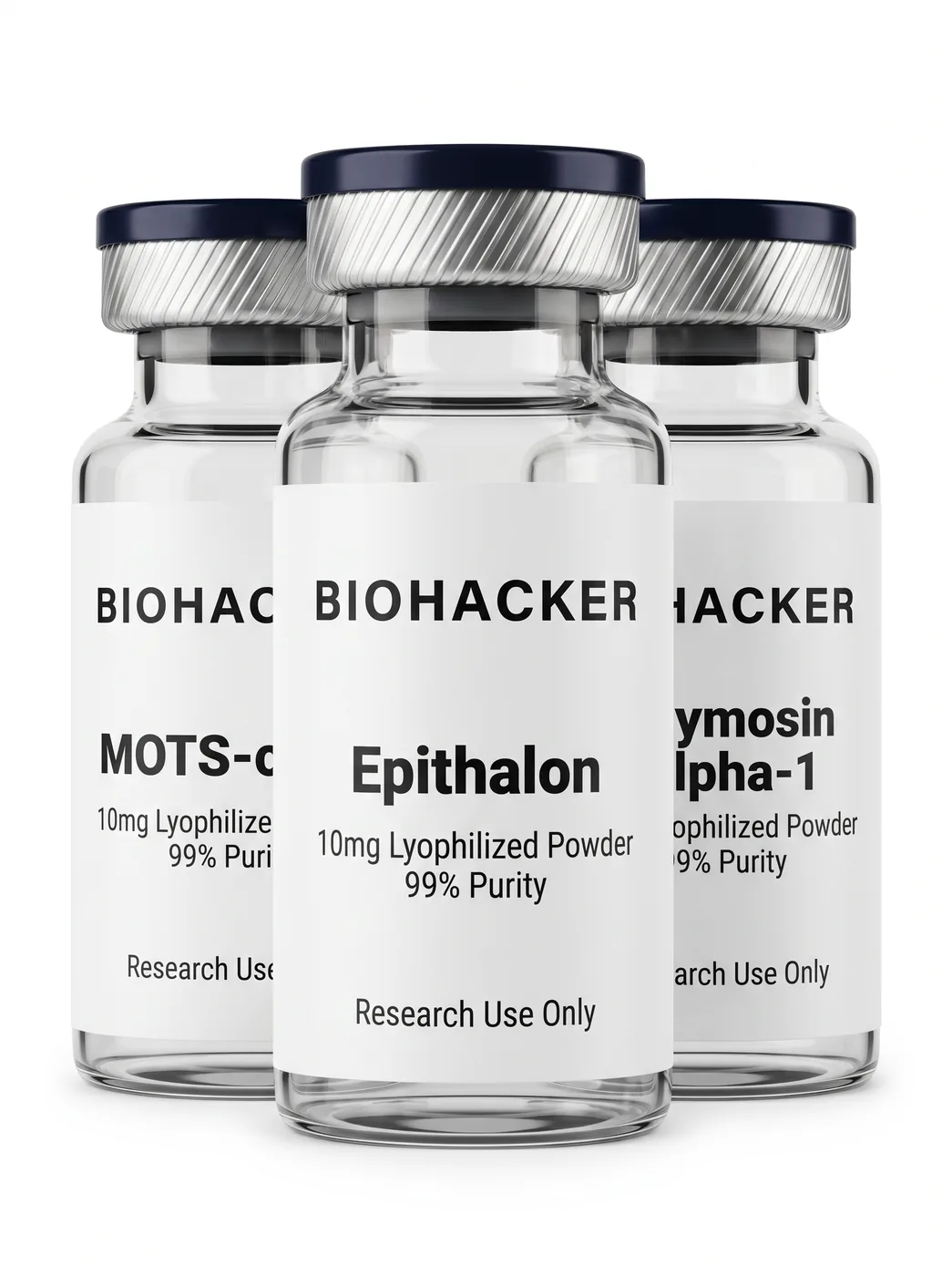
MOTS-c (Mitochondrial Open reading frame of the 12S rRNA-c) addresses the hallmark of mitochondrial dysfunction. It is a mitochondria-derived peptide — encoded in the mitochondrial genome rather than the nuclear genome — that acts as a retrograde signal from mitochondria to the nucleus and skeletal muscle. MOTS-c activates AMPK signaling, promotes glucose uptake in muscle tissue, regulates the folate cycle, and has been shown in animal models to extend lifespan and improve metabolic resilience under stress. Plasma MOTS-c levels decline with age, positioning it as a mitochondrial hormone with longevity relevance.
Epithalon addresses the hallmark of telomere attrition. As the only compound in the stack with documented telomerase upregulation activity, it directly targets the mechanism of telomere shortening that drives cellular senescence. Derived from Epithalamin (a pineal gland extract), Epithalon has over 40 years of Russian research from Khavinson’s group showing telomere extension in multiple animal models, alongside effects on melatonin production and antioxidant status.
NAD+ targets the metabolic/energy hallmark. MOTS-c targets the mitochondrial dysfunction hallmark. Epithalon targets the telomere attrition hallmark. Three compounds, three independent hallmarks, zero mechanism overlap.
Protocol reference
Research protocol: NAD+ 500mg–1g per research design; MOTS-c 5–10mg subcutaneous daily or several times per week; Epithalon 5–10mg subcutaneous daily in 10-day cycles, 2–4 times per year. MOTS-c and NAD+ can be run continuously; Epithalon is cycled. This is the most scientifically structured stack in the catalog — appropriate for researchers applying the hallmarks framework to experimental longevity protocols.
What’s included
- NAD+ — HPLC-verified ≥99% purity
- MOTS-c — HPLC-verified ≥99% purity
- Epithalon — HPLC-verified ≥99% purity
For research use only. Not for human consumption. Not medical advice. COA available on every batch. HPLC-verified ≥99% purity on all compounds.
Reviews
There are no reviews yet.