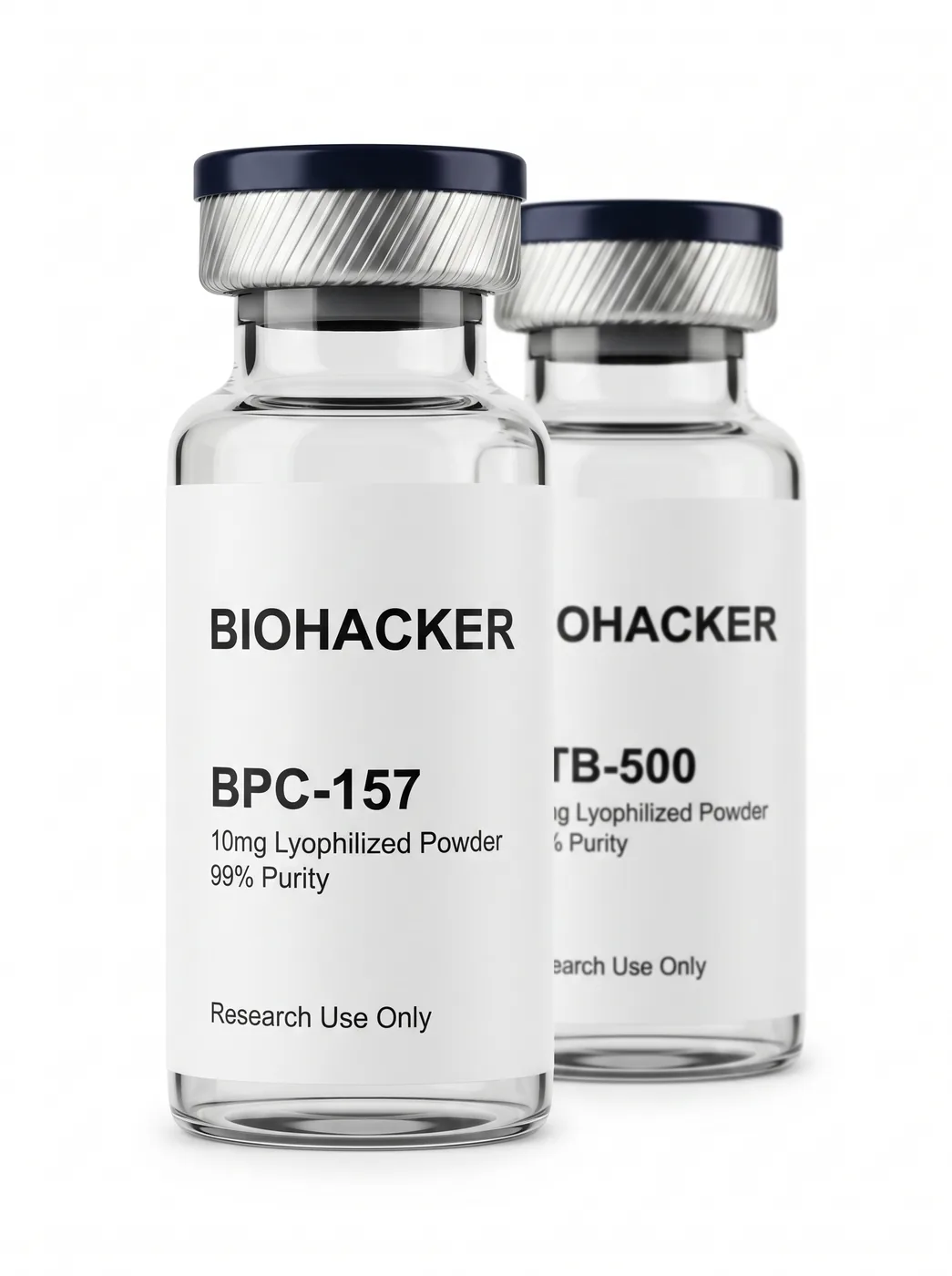
BPC-157 and TB-500 are the two most documented peptides in the preclinical repair literature. They act through different and complementary mechanisms, producing additive effects at the injury site. Running them in parallel — not sequentially — is the approach the literature supports.
Why these two compounds
BPC-157 (Body Protection Compound-157) is a 15-amino acid peptide with 30+ years of animal model data and zero toxic deaths recorded across the preclinical literature. Its primary mechanism is activation of the nitric oxide pathway, which repairs endothelial cells, promotes angiogenesis at injury sites, and upregulates growth hormone receptors locally. It acts where it is administered — subcutaneous injection near the target site is the correct approach for musculoskeletal repair; oral administration acts locally on the gut lining.
TB-500 (Thymosin Beta-4) regulates actin polymerization — the process controlling cell shape, division, and migration. In repair contexts, TB-500 drives new cell migration to injury sites and promotes vascular formation. Its systemic distribution profile means it reaches injury sites regardless of injection location.
The two compounds address different phases of the repair cascade. BPC-157 establishes the vascular and signaling conditions. TB-500 drives cellular recruitment and tissue remodeling. They are not redundant — they are complementary.
Protocol reference
Research protocol: BPC-157 250–500mcg subcutaneous daily near the target site; TB-500 2mg subcutaneous 2x per week. 8 weeks on, 4 weeks off. Injection site specificity is critical for BPC-157 — administer near the area of interest, not at a neutral site.
What’s included
For research use only. Not for human consumption. Not medical advice. COA available on every batch. HPLC-verified ≥99% purity on all compounds.
Reviews
There are no reviews yet.